
The Best Indoor Plant Light and the Types for Your Garden
by Eren Eugen | Last updated on [wpdts-month-name-short] [wpdts-day days=”-5″], [wpdts-year]
Good organic soil, adequate water, and an appropriate volume of sunlight are three important elements for houseplants to thrive. Among these elements, providing sufficient indoor plant light is quite a challenge for them all.
Ensuring an adequate and stable indoor plant light is essential to the growth of your houseplants and the success of your indoor gardening. This implies providing the required energy your indoor plants need to perform various functions such as foliage growth, flowering, fruiting, setting seeds, and more.
There’s no doubt that light plays an important role in the health of your indoor plants. And if you get it wrong from the start, you have set yourself up for a frustrating gardening experience.
All houseplants require light to perform photosynthesis, but their light requirement varies for each houseplant. While some houseplants prefer low light, others do best with much bright light.
So, there’s no one size fits all as far as indoor plant light requirement is concerned.
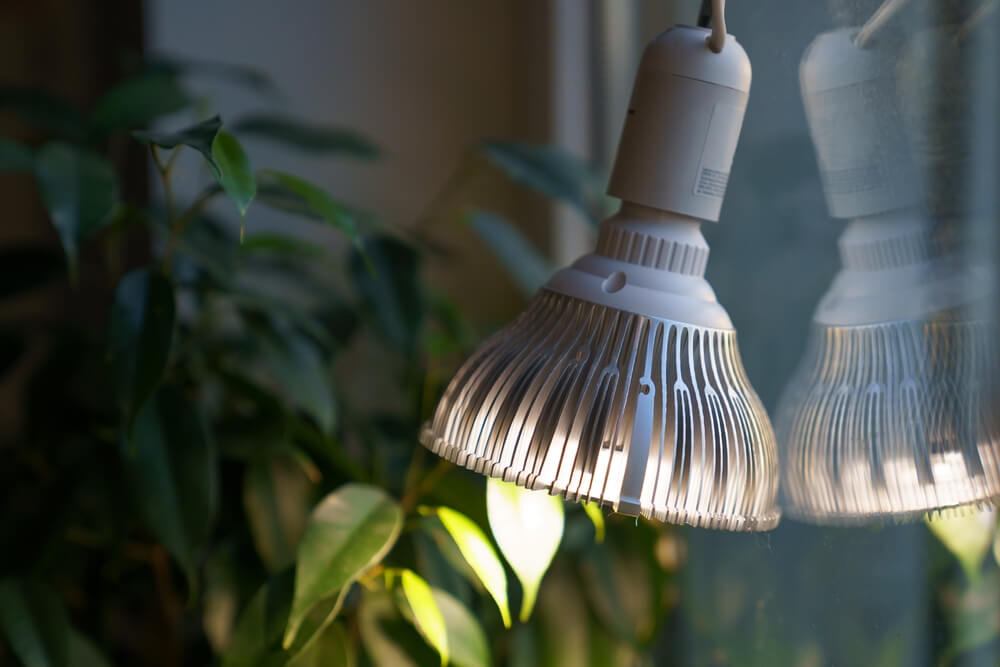
Tomatoes and other edibles need at least six hours of full sunlight. Indoor flowering plants such as Christmas cactus will do best near a sunny window, while African violets prefer to retreat to a darker corner.
On the other hand, seedlings require lots of bright light, and when they don’t receive enough they get weak and leggy. In most cases, even the sunniest windowsill won’t provide the intensity or duration of light your indoor plants need, especially in winter. That’s when you bring in the “sun” in the form of artificial lighting or grow lights.
If you’re thinking about introducing artificial grow light into your indoor garden, we’ll share with you what you need to know as you read on. Meanwhile, there are certain indicators to confirm that your indoor plant light is limited in supply.
Signs That You Need to Increase Indoor Plant Light
If your indoor plants thrive during the spring and summer but struggle the rest of the year, then it’s time to introduce supplementary light to your indoor garden.
Extending the hours of light your indoor plants get in wintertime can reinvigorate them until the next growing season. It can also help certain plants flower and make fruit.
However, since light deficient houseplants experience some challenges, here are some signs that your indoor plant light is not enough and should be looked into:
- Smaller than normal leaves
- Dying or yellowing leaves
- Tall and leggy growth
- Variegated plants losing variegation
- New pests and diseases
Introducing Grow Lights to Your Indoor Garden
Artificial grow lights are suitable substitutes for direct sunlight your indoor plants need to grow. They are most helpful during winter when there’s insufficient indoor plant light to carry out photosynthesis.
Grow lights are ideal at the seeding stage of growing your indoor plants because they help ensure stocky, green seedlings. By learning how houseplants use light, you can select a grow lights system that is right for the indoor plants you want to grow.
To better understand the distinctions of the various grow lights for indoor plants, you want to take note of some aspects of gardening lights.
Light Intensity: How much light your indoor plants get depends on their intensity and the intensity is dependent on the brightness of the grow light bulbs, and how close they are to the houseplants.
Indoor plants differ in their need for light intensity. Some flowering houseplants, such as African violets and begonias, are happy being 10 to 12 inches away from a light source. Foliage plants, such as ivy can be placed as much as 36 inches away from a light source.
Other flowering houseplants such as orchids, gardenias, and citrus, as well as most vegetable plants, require a much higher light intensity to thrive.
Light Duration: There is a certain amount of light your indoor plants need per day and then, they will need to rest. Houseplants go through respiration when it’s dark and it’s important for their growth process as much as the amount of light they get.
It’s advisable to get grow indoor plant lights with a built-in timer to regulate the amount of light indoor plants receive. Experts categorize houseplants into three based on the amount of light they require:
- Short-day plants – Indoor plants in this category require 12 hours of light per day to thrive. Such houseplants are chrysanthemums, kalanchoe, azaleas, and begonias.
- Day-neutral plants – These include foliage houseplants such as geraniums and African violets, and they require 8 to 12 hours of light per day.
- Long-day plants – Most seedlings for vegetables and flowering houseplants require 14 to 18 hours of light per day. They usually become pale and leggy when they don’t get this much light.
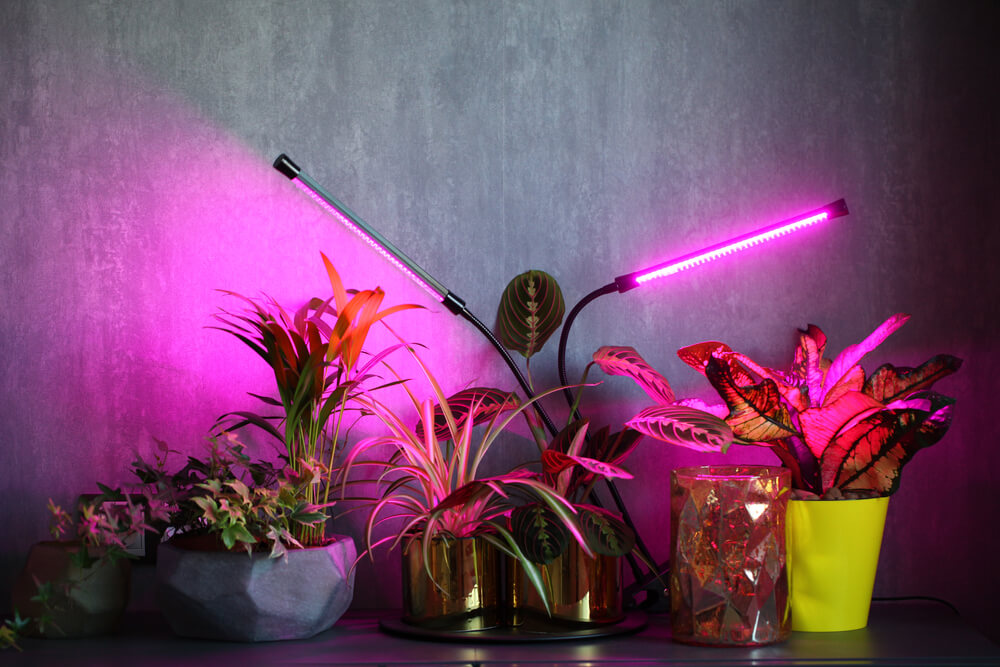
Light Spectrum: This explains the spectrum of light colors indoor plants need to survive. Standard grow lights may appear clear or white, but they consist of multiple colors emitted in varying degrees. This is referred to as ‘full spectrum light’ and this spectrum contains some colors helpful to indoor plants:
- Red light regulates plant growth and helps plants produce flowers and fruit
- Blue light helps plants produce chlorophyll, the pigment they need to grow. It also helps encourage germination and root development in young plants and seedlings
- Green light helps maximize photosynthesis
A standard, full-spectrum grow indoor plant light is helpful for the growth of most houseplants. Some grow lights allow you to regulate the color balance from red light (warm) to blue light (cool) depending on the need of the houseplants.
What to Consider When Choosing a Grow Light
Choosing the best grow lights for your indoor plants can sometimes be tricky. You may end up buying grow light that is not suitable for your houseplants if you don’t put some things into consideration. Asking yourself these questions can help you make the best choice:
- What types of plants will you be growing?
- Will you grow year-round or just start seeds in spring?
- How tall will the plants get?
- Where will you put the indoor plant light – in your living space, or hidden away in the basement?
- Should the indoor plant light be mobile, that is, on casters?
These are some of the questions you have to answer to ensure you get the best grow lights for your indoor plants. However, there are other factors you’d like to consider as well:
- Size: When deciding what size of grow light you need, think about how many plants you’ll need the light to cover.
- Type: There are various types of grow lights you can choose from, from panels to ones that hang overhead or screw into a regular light fixture. The type of plants you have, the amount of existing natural light, and where your plants are located will help you narrow down your choices.
- Wattage: Though the more important metric is PPFD or photosynthetic photon flux density, which measures the specific light emission a lamp provides, wattage is a useful tool to determine the correct fixture for your houseplants.
The rule of thumb is that you need 32 watts per square foot, so most indoor plants (especially herbs) will do just fine with a lower-watt light.
Types of Grow Lights for Indoor Plants
There are several types of grow lights in terms of brand and design, but based on category, there are four main types.
LED (light-emitting diode)
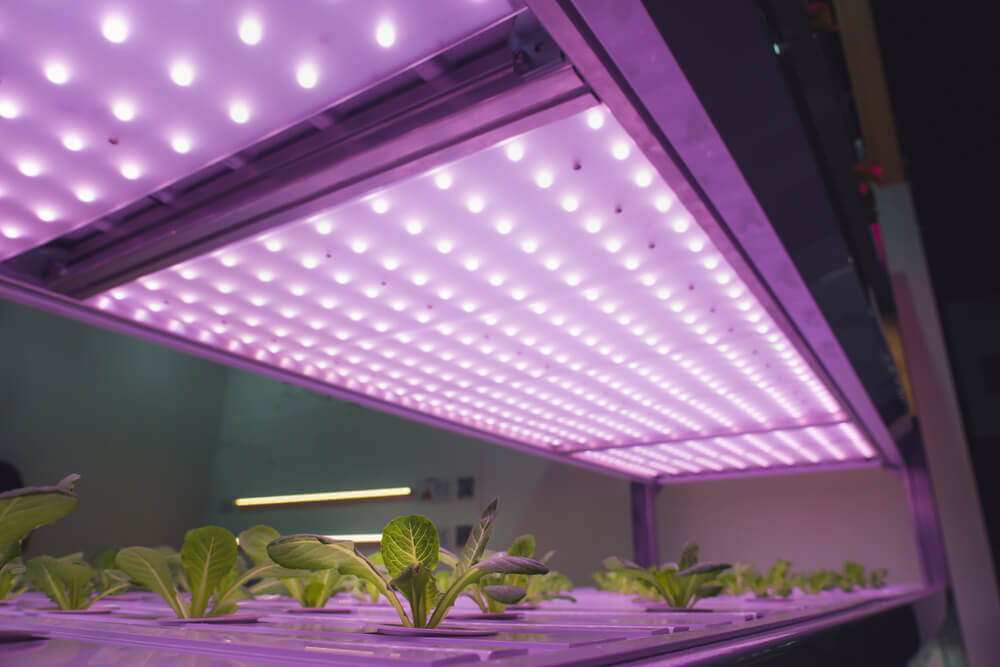
They are the most popular type of grow lights for indoor gardening. Emitting virtually no heat and requiring little power to operate, LEDs can be programmed to accurately simulate the 5700K color temperature of sunlight and can simultaneously produce the red and blue band spectrums needed for both vegetative growth and flowering. LED grow lights are expensive, but they are effective.
Incandescent Bulbs
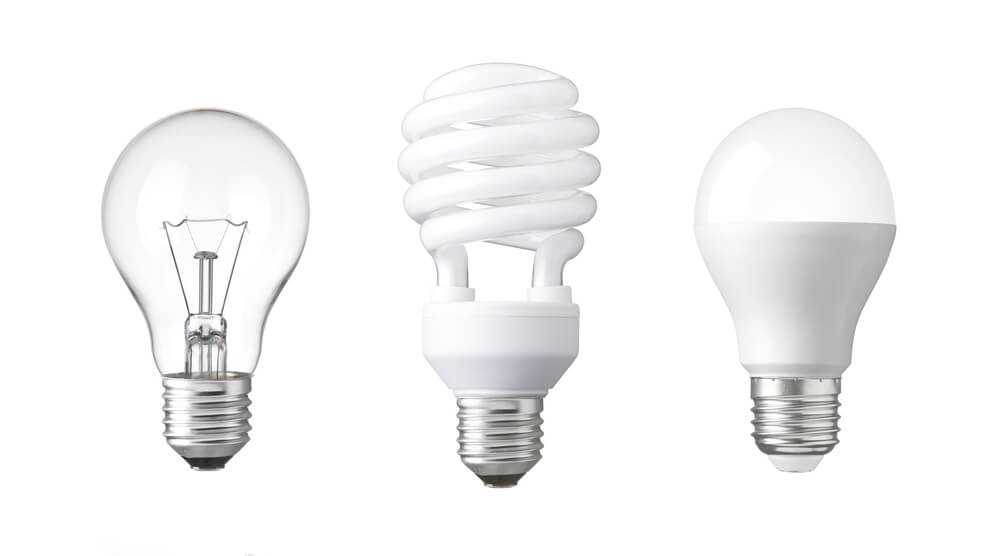
They are the cheapest option for the grow lights and cost a few dollars. Although they may do just fine for a few plants or be used in conjunction with natural light in a sunny room, the heat of these bulbs requires a distance of two feet or more to prevent heat damage and should be used cautiously.
Fluorescent Lights
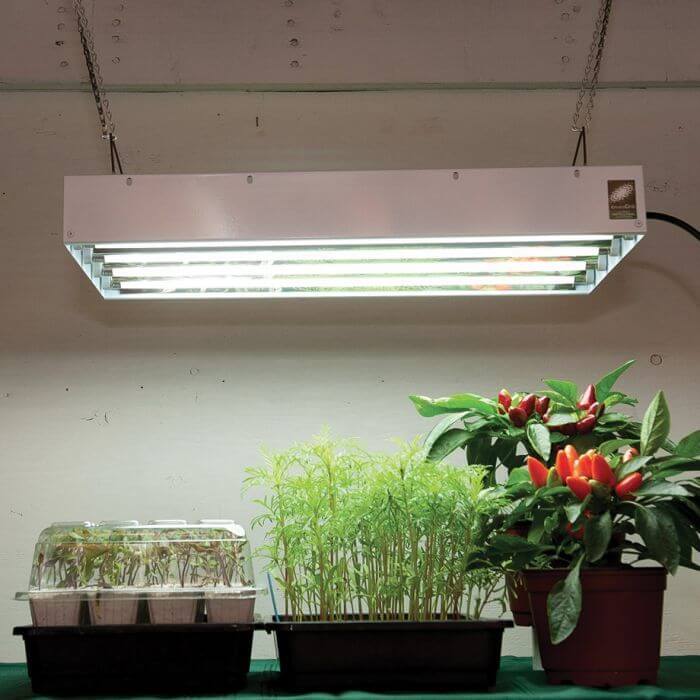
They are also one of the most preferred grow light options for indoor gardeners. They produce less heat, they are safer, more versatile, and budget-friendly. Traditional fluorescent lights are limited in the spectrum, but recent ones offer a wider light spectrum for all-purpose use. They are suitable to grow vegetable houseplants indoors.
High-Intensity Discharge Lights

HID grow light solution is also a good choice for your indoor plants. They are a bit similar to Metal Halide lights (MH) and High-Pressure Sodium (HPS) indoor plant lights, but are more expensive and a bit complex to operate. HID lights are very efficient for buds and flowering houseplants to encourage the growth of leaves.
Choosing Between LED and Fluorescent Grow Lights
These two categories of grow lights are the most used and popular among indoor gardeners. Some prefer one to another and would go for whichever meets their needs. But for knowledge’s sake, which is better?
We wouldn’t say one indoor plant light is better than the other as preference and houseplant requirements play a significant role in your choice between both of them. While both produce full-spectrum light, LEDs are better for the environment, but not so pocket friendly as fluorescent lights.
LEDs use half the electricity and last 5 times longer than fluorescent lights. Both grow indoor plant lights emit little heat and are effective depending on the houseplants you want to use them with. If you’re a beginner and would want to save cost with grow lights, fluorescent bulbs are your best option, but you may be limited to the kind of houseplants you can cultivate.
7 Best Indoor Plant Grow Lights of 2023
- GE LED Indoor Grow Light Bulb
- Spider Farmer SF1000 LED Grow Light
- Aspect Luxury LED Grow Light
- LBW Full Spectrum Grow Light with Stand
- GrowLED LED Umbrella Plant Grow Light
- Hydrofarm Agrobrite FLC32D Compact Grow Light
- Feit Electric Full Spectrum Dual Bulb Grow Light
| # | Preview | Product | Wattage/Volts | Price | |
|---|---|---|---|---|---|
| 1 | 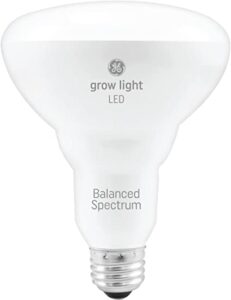 | GE LED Indoor Grow Light Bulb | 9 Watts | $11.95 |  |
| 2 | 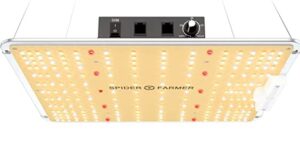 | Spider Farmer SF1000 LED Grow Light | 100 Watts | $117.99 | |
| 3 | 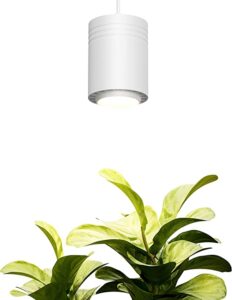 | Aspect Luxury LED Grow Light | 20 Watts | $199.99 | |
| 4 | 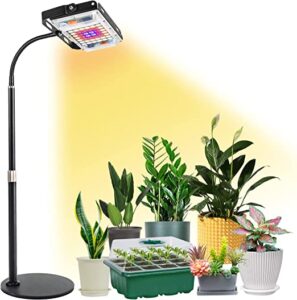 | LBW Full Spectrum Grow Light with Stand | 150 Watts | $29.99 | |
| 5 | 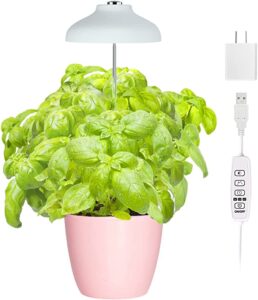 | GrowLED LED Umbrella Plant Grow Light | 5 Volts | $16.99 | |
| 6 | 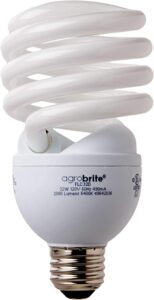 | Hydrofarm Agrobrite FLC32D Compact Grow Light | 32 Watts | $15.60 | |
| 7 | 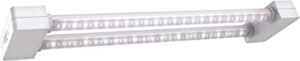 | Feit Electric Full Spectrum Dual Bulb Grow Light | 19 Watts | $35.85 | |
1. GE LED Indoor Grow Light Bulb
Brand: GE Lighting | Light Type: LED | Wattage: 9 watts
The GE Full Spectrum Grow Light Bulb is a popular choice for indoor gardeners looking for a high-quality grow light. This bulb boasts a variety of features, including light intensity, light spectrum, wattage, heat output, size and coverage area, durability and lifespan, and price. In this review, we will take an in-depth look at each of these features to determine whether the GE Full Spectrum Grow Light Bulb is the right choice for your indoor plants.
Features:
Light Intensity: The GE Full Spectrum Grow Light Bulb offers a high light intensity of 1700 lumens, making it suitable for a variety of plants. This light intensity is perfect for plants that require high levels of light, such as succulents and cacti. However, it may be too intense for plants that require lower levels of light, such as ferns and ivy.
Light Spectrum: This grow light bulb provides a full spectrum of light, including red, blue, and green wavelengths. The red and blue wavelengths are particularly important for plant growth and flowering, while the green wavelengths help with photosynthesis. This full spectrum of light ensures that your plants receive all the light they need to thrive.
Wattage: The GE Full Spectrum Grow Light Bulb has a wattage of 9 watts, which is relatively low compared to other grow lights on the market. However, this low wattage ensures that the bulb does not consume too much energy, making it an energy-efficient choice for indoor gardening.
Heat Output: This grow light bulb produces a low amount of heat, which is important for the health of your plants and the safety of your indoor space. The low heat output ensures that your plants do not become overheated, and it also reduces the risk of fire hazards in your home.
Size and Coverage Area: This bulb is a standard size, making it easy to install in any standard light fixture. It has a coverage area of up to 12 square feet, making it suitable for small to medium-sized indoor gardens.
Durability and Lifespan: The GE Full Spectrum Grow Light Bulb is made of high-quality materials, ensuring its durability and longevity. It has an average lifespan of 15,000 hours, which is longer than most other grow light bulbs on the market.
Price: This grow light bulb is priced affordably, making it a great option for those on a budget. Its low price point does not compromise its quality, making it a popular choice among indoor gardeners.
Pros
-
Offers high light intensity of 1700 lumens -
Provides a full spectrum of light for optimal plant growth -
Low wattage ensures energy efficiency -
Affordable price point -
Coverage area may be too small for larger indoor gardens
Cons
-
Coverage area may be too small for larger indoor gardens -
May be too intense for plants that require lower levels of light
2. Spider Farmer SF1000 LED Grow Light
Brand: Spider Farmer | Light Type: LED | Wattage: 100 watts
The Spider Farmer Grow Light is a popular choice among indoor gardeners looking for a high-quality grow light. This grow light offers a variety of features, including light intensity, light spectrum, wattage, heat output, size and coverage area, durability and lifespan, and price. In this review, we will take an in-depth look at each of these features to determine whether the Spider Farmer Grow Light is the right choice for your indoor plants.
Features:
Light Intensity: The Spider Farmer Grow Light provides a high light intensity of up to 4500 lumens, making it suitable for a wide range of plants. This light intensity is perfect for plants that require high levels of light, such as cannabis and succulents. However, it may be too intense for plants that require lower levels of light, such as ferns and ivy.
Light Spectrum: This grow light provides a full spectrum of light, including red, blue, and white wavelengths. The red and blue wavelengths are particularly important for plant growth and flowering, while the white wavelengths help with photosynthesis. This full spectrum of light ensures that your plants receive all the light they need to thrive.
Wattage: The Spider Farmer Grow Light has a wattage of 100 watts, which is relatively low compared to other grow lights on the market. However, this low wattage ensures that the grow light does not consume too much energy, making it an energy-efficient choice for indoor gardening.
Heat Output: This grow light produces a low amount of heat, which is important for the health of your plants and the safety of your indoor space. The low heat output ensures that your plants do not become overheated, and it also reduces the risk of fire hazards in your home.
Size and Coverage Area: The Spider Farmer Grow Light comes in a variety of sizes, making it easy to find a grow light that fits your indoor garden. It has a coverage area of up to 3 feet by 3 feet, making it suitable for small to medium-sized indoor gardens.
Durability and Lifespan: The Spider Farmer Grow Light is made of high-quality materials, ensuring its durability and longevity. It has an average lifespan of 50,000 hours, which is longer than most other grow lights on the market.
Price: This grow light is priced competitively, making it a great option for those looking for a high-quality grow light without breaking the bank. Its low price point does not compromise its quality, making it a popular choice among indoor gardeners.
Pros
-
The light is very bright and full spectrum -
It is expandable -
Comes with adjustable intensity -
Comes in a variety of sizes to fit any indoor garden -
Produces a low amount of heat, reducing the risk of plant damage and fire hazards -
Low wattage ensures energy efficiency -
Full spectrum of light for optimal plant growth -
Provides a high light intensity of up to 4500 lumens
Cons
-
Coverage area may be too small for larger indoor gardens -
May be too intense for plants that require lower levels of light
3. Aspect Luxury LED Grow Light
Brand: Aspect | Light Type: LED | Wattage: 20 watts
The Aspect Luxury Grow Light is a high-end option for indoor gardening enthusiasts. It boasts a range of features including light intensity, light spectrum, wattage, heat output, size and coverage area, durability and lifespan, and price. In this review, we’ll take an in-depth look at each of these features to help you determine whether the Aspect Luxury Grow Light is the right choice for your indoor plants.
Features:
Light Intensity: The Aspect Luxury Grow Light provides a high light intensity of up to 9600 lumens. This is ideal for plants that require high levels of light, such as succulents and cacti. The adjustable dimming function allows for more control over the light intensity, making it suitable for plants that require lower levels of light as well.
Light Spectrum: This grow light provides a full spectrum of light, including red, blue, and white wavelengths. The red and blue wavelengths are important for plant growth and flowering, while the white wavelengths help with photosynthesis. The full spectrum of light ensures that your plants receive all the light they need to thrive.
Wattage: The Aspect Luxury Grow Light has a wattage of 65 watts, making it a high-energy-consuming grow light. However, this higher wattage ensures that the bulb produces a high level of light, making it ideal for large indoor gardens.
Heat Output: This grow light produces a moderate amount of heat, which may be too high for some plants. However, the built-in cooling system helps to regulate the temperature and keep your plants from becoming overheated.
Size and Coverage Area: The Aspect Luxury Grow Light is a relatively large grow light, making it ideal for larger indoor gardens. It has a coverage area of up to 16 square feet, providing ample coverage for multiple plants.
Durability and Lifespan: The Aspect Luxury Grow Light is made of high-quality materials, ensuring its durability and longevity. It has an average lifespan of up to 50,000 hours, making it a long-lasting choice for indoor gardening.
Price: This grow light is priced higher than many other grow lights on the market, making it a luxury option for serious indoor gardeners.
Pros
-
Built-in cooling system helps regulate temperature -
Ideal for large indoor gardens -
Large coverage area of up to 16 square feet -
Adjustable dimming function for more control over light intensity
Cons
-
High wattage may result in higher energy consumption -
Higher price point compared to other grow lights on the market -
Moderate heat output may be too high for some plants
4. LBW Full Spectrum Grow Light with Stand
Brand: LBW | Light Type: LED | Wattage: 150 watts
The LBW Grow Light is a popular choice for indoor gardeners looking for a reliable and efficient grow light. This grow light boasts a variety of features, including light intensity, light spectrum, wattage, heat output, size and coverage area, durability and lifespan, and price. In this review, we will take an in-depth look at each of these features to determine whether the LBW Grow Light is the right choice for your indoor plants.
Features:
Light Intensity: The LBW Grow Light offers a high light intensity of 10,000 lumens, making it suitable for a wide variety of plants. This high light intensity ensures that your plants receive the optimal amount of light they need to thrive, making it a great choice for those looking to grow plants indoors.
Light Spectrum: This grow light provides a full spectrum of light, including red, blue, and white wavelengths. The red and blue wavelengths are essential for plant growth and flowering, while the white wavelengths provide a more natural light that is easy on the eyes. This full spectrum of light ensures that your plants receive all the light they need to thrive and grow.
Wattage: The LBW Grow Light has a wattage of 100 watts, which is relatively high compared to other grow lights on the market. However, this high wattage ensures that the bulb provides sufficient light intensity, making it a suitable choice for larger indoor gardens.
Heat Output: This grow light produces a low amount of heat, which is important for the health of your plants and the safety of your indoor space. The low heat output ensures that your plants do not become overheated, and it also reduces the risk of fire hazards in your home.
Size and Coverage Area: This grow light is relatively large, measuring 15.8 x 8.4 x 2.4 inches. It has a coverage area of up to 4 x 4 feet, making it suitable for larger indoor gardens. However, its large size may make it difficult to install in smaller spaces.
Durability and Lifespan: The LBW Grow Light is made of high-quality materials, ensuring its durability and longevity. It has an average lifespan of 50,000 hours, which is longer than most other grow lights on the market.
Price: This grow light is priced affordably, making it a great option for those on a budget. Its low price point does not compromise its quality, making it a popular choice among indoor gardeners.
Pros
-
Affordable price point -
Produces a low amount of heat, reducing the risk of plant damage and fire hazards -
High wattage ensures sufficient light intensity for larger indoor gardens
Cons
-
May be too intense for plants that require lower levels of light -
Large size may make it difficult to install in smaller spaces
5. GrowLED LED Umbrella Plant Grow Light
Brand: GrowLED | Light Type: LED | Voltage: 5 volts
The GrowLED Umbrella Light is a unique and versatile grow light that offers a variety of features for indoor gardeners. These features include light intensity, light spectrum, wattage, heat output, size and coverage area, durability and lifespan, and price. In this review, we will take a closer look at each of these features to determine whether the GrowLED Umbrella Light is the right choice for your indoor plants.
Features:
Light Intensity: The GrowLED Umbrella Light offers a light intensity of 1200 lumens, making it suitable for a variety of plants. This light intensity is perfect for plants that require moderate levels of light, such as herbs, lettuce, and other leafy greens. However, it may not be intense enough for plants that require high levels of light, such as succulents and cacti.
Light Spectrum: This grow light offers a full spectrum of light, including red, blue, and white wavelengths. The red and blue wavelengths are particularly important for plant growth and flowering, while the white wavelengths help with overall plant health. This full spectrum of light ensures that your plants receive all the light they need to thrive.
Wattage: The GrowLED Umbrella Light has a wattage of 30 watts, which is relatively high compared to other grow lights on the market. This high wattage ensures that the light provides enough energy for your plants to grow and thrive.
Heat Output: This grow light produces a moderate amount of heat, which is important for the health of your plants. However, the heat output may be too high for smaller indoor spaces or for plants that are sensitive to high temperatures.
Size and Coverage Area: The GrowLED Umbrella Light is a unique design that can be adjusted to fit a variety of indoor spaces. It has a coverage area of up to 10 square feet, making it suitable for small to medium-sized indoor gardens.
Durability and Lifespan: This grow light is made of high-quality materials, ensuring its durability and longevity. It has an average lifespan of 25,000 hours, which is longer than most other grow lights on the market.
Price: The GrowLED Umbrella Light is priced competitively, making it an affordable option for indoor gardeners. Its unique design and features make it a popular choice among plant enthusiasts.
Pros
-
Competitive price point -
Can be adjusted to fit a variety of indoor spaces -
High wattage ensures enough energy for plants to grow and thrive -
Offers a full spectrum of light for optimal plant growth
Cons
-
Heat output may be too high for smaller indoor spaces or for plants that are sensitive to high temperatures -
May not be intense enough for plants that require high levels of light
6. Hydrofarm Agrobrite FLC32D Compact Grow Light
Brand: Hydrofarm | Light Type: Fluorescent | Wattage: 32 watts
The Hydrofarm Agrobrite Fluorescent Bulb is a popular choice for indoor gardeners looking for a reliable and efficient grow light. This bulb boasts a variety of features, including light intensity, light spectrum, wattage, heat output, size and coverage area, durability and lifespan, and price. In this review, we will take an in-depth look at each of these features to determine whether the Hydrofarm Agrobrite Fluorescent Bulb is the right choice for your indoor plants.
Features:
Light Intensity: This grow light bulb offers a moderate light intensity of 2000 lumens, making it suitable for a variety of plants. This light intensity is ideal for plants that require moderate levels of light, such as herbs, vegetables, and flowering plants. However, it may not be intense enough for plants that require high levels of light, such as succulents and cacti.
Light Spectrum: The Hydrofarm Agrobrite Fluorescent Bulb provides a balanced spectrum of light, including blue and red wavelengths. These wavelengths are important for plant growth and development, as well as flower and fruit production. However, it does not provide the full spectrum of light that some other grow lights offer.
Wattage: This grow light bulb has a wattage of 32 watts, which is relatively high compared to some other grow lights on the market. However, this high wattage ensures that the bulb provides enough light for your plants to thrive.
Heat Output: The Hydrofarm Agrobrite Fluorescent Bulb produces a low amount of heat, which is important for the health of your plants and the safety of your indoor space. The low heat output ensures that your plants do not become overheated, and it also reduces the risk of fire hazards in your home.
Size and Coverage Area: This bulb is a standard size, making it easy to install in any standard light fixture. It has a coverage area of up to 4 square feet, making it suitable for small indoor gardens or for use as a supplemental light source.
Durability and Lifespan: The Hydrofarm Agrobrite Fluorescent Bulb is made of high-quality materials, ensuring its durability and longevity. It has an average lifespan of 20,000 hours, which is longer than many other grow light bulbs on the market.
Price: This grow light bulb is priced affordably, making it a great option for those on a budget. Its low price point does not compromise its quality, making it a popular choice among indoor gardeners.
Pros
-
High wattage ensures ample light for plants to thrive -
Provides a balanced spectrum of light for plant growth and development -
Offers moderate light intensity of 2000 lumens
Cons
-
Does not offer the full spectrum of light that some other grow lights provide -
May not provide enough light intensity for plants that require high levels of light.
7. Feit Electric Full Spectrum Dual Bulb Grow Light
Brand: Feit Electric | Light Type: LED | Wattage: 19 watts
The Feit Electric Dual Grow Tube Light is a popular choice for indoor gardeners looking for a high-quality grow light. This tube light boasts a variety of features, including light intensity, light spectrum, wattage, heat output, size and coverage area, durability and lifespan, and price. In this review, we will take an in-depth look at each of these features to determine whether the Feit Electric Dual Grow Tube Light is the right choice for your indoor plants.
Features:
Light Intensity: The Feit Electric Dual Grow Tube Light offers a high light intensity of 1800 lumens, making it suitable for a variety of plants. This light intensity is perfect for plants that require high levels of light, such as succulents and cacti. However, it may be too intense for plants that require lower levels of light, such as ferns and ivy.
Light Spectrum: This grow light tube provides a dual spectrum of light, including both red and blue wavelengths. The red and blue wavelengths are particularly important for plant growth and flowering, and this dual spectrum ensures that your plants receive all the light they need to thrive.
Wattage: The Feit Electric Dual Grow Tube Light has a wattage of 19 watts, which is relatively low compared to other grow lights on the market. However, this low wattage ensures that the tube light does not consume too much energy, making it an energy-efficient choice for indoor gardening.
Heat Output: This grow light tube produces a low amount of heat, which is important for the health of your plants and the safety of your indoor space. The low heat output ensures that your plants do not become overheated, and it also reduces the risk of fire hazards in your home.
Size and Coverage Area: This tube light is 2 feet long, making it suitable for smaller indoor gardens. It has a coverage area of up to 4 square feet, making it ideal for small to medium-sized indoor gardens.
Durability and Lifespan: The Feit Electric Dual Grow Tube Light is made of high-quality materials, ensuring its durability and longevity. It has an average lifespan of 25,000 hours, which is longer than most other grow light tubes on the market.
Price: This grow light tube is priced affordably, making it a great option for those on a budget. Its low price point does not compromise its quality, making it a popular choice among indoor gardeners.
Pros
-
Produces a low amount of heat, reducing the risk of plant damage and fire hazards -
Suitable for smaller indoor gardens -
Low wattage ensures energy efficiency -
Provides a dual spectrum of light for optimal plant growth
Cons
-
May be too intense for plants that require lower levels of light -
Coverage area may be too small for larger indoor gardens
Conclusion
Indoor plants need a certain amount of sunlight each day to live, just like people need a certain number of calories each day to stay alive. How much space is needed depends on the type of houseplant, its growth stage, and how it needs to be cared for.
Even if your house or apartment has a lot of windows, you probably won’t get enough sunlight to keep your indoor plants happy, especially in the winter. That’s why it’s good for your indoor garden to use artificial grow lights.
Grow lights aren’t as good as sunlight, but they are a great way to extend the growing season and a better option. So, if your houseplants don’t get much direct sunlight, it’s best to choose the best grow lights for your budget and your plants’ needs.
The position of the light is also important, along with its intensity, spectrum, and length of time. Make sure your indoor plants get the amount of light they need each day, and as long as you don’t cut them off from it, you can sit back and watch them grow healthy as long as you don’t do anything else to hurt them.
FAQs
Which is better – sunlight or grow lights?
Sunlight is a lot and far better than grow lights. Grow lights are just alternatives and while a full spectrum grow light is almost as good as sunlight, they are no match for it. 6 hours of direct sunlight that indoor plants get is equivalent to 13 hours of grow lights. Besides, sunlight is free, unlike grow lights.
What light can you use when there is no sunlight?
In the absence of adequate sunlight for your houseplant, you can use artificial grow lights to help your indoor plants carry out photosynthesis.
What is the best indoor plant light?
Aside from sunlight, the best type of light for indoor plants is dependent on the houseplant’s requirement and the features of the grow light. You can either choose LED lights, fluorescent lights, HID lights, or bulbs.
How do I know the best grow lights to choose from?
In choosing the best grow lights for indoor plants you want to consider the cost, the houseplant requirement, the number of houseplants to cover to factor the size of grow light, the wattage, and the color.
What color of light is best for indoor plants?
Indoor plants grow under different colors of light and these colors have specific functions and relevance for houseplant growth. Blue and red lights are the best colors of light for your houseplant as it is best absorbed by the plant’s chlorophyll. However, a grow light with a full spectrum is suitable for your houseplants.
Can a daylight bulb be used as grow lights?
Yes, they can be used as grow lights but they may not be effective to deliver what’s required for your indoor plants to grow.
Are LED lights good for indoor plants?
They are currently the most popular option of the grow lights and are effective, efficient, and more powerful. LED grow lights are next to sunlight, and they emit less heat.
Are white LED lights good for houseplants?
While they can help houseplants grow, they are not necessarily the best or the most efficient. White LED lights only provide 40% of usable lights and the rest is wasted in power consumption and heat.
Should I leave my grow lights for 24 hours?
It’s not advisable to leave your grow light for that long. Indoor plants also need rest and they carry out respiration during the dark times of the day.
Top Rated Indoor Plant Grow Lights of 2023
| # | Preview | Product | Wattage/Volts | Price | |
|---|---|---|---|---|---|
| 1 | | GE LED Indoor Grow Light Bulb | 9 Watts | $11.95 | |
| 2 | | Spider Farmer SF1000 LED Grow Light | 100 Watts | $117.99 | |
| 3 | | Aspect Luxury LED Grow Light | 20 Watts | $199.99 | |
| 4 | | LBW Full Spectrum Grow Light with Stand | 150 Watts | $29.99 | |
| 5 | | GrowLED LED Umbrella Plant Grow Light | 5 Volts | $16.99 | |
EDITORS PICK OF THE BEST INDOOR PLANT GROW LIGHT
-
GE LED Indoor Grow Light Bulb
-
LBW Full Spectrum Grow Light with Stand
-
Hydrofarm Agrobrite FLC32D Compact Grow Light
BEST SELLING INDOOR PLANT GROW LIGHT
BESTSELLER NO. 1
SALE
Hydrofarm Agrobrite FLC32D Compact Grow Light
$15.60
BESTSELLER NO. 2
SALE
GE LED Indoor Grow Light Bulb
$11.95
BESTSELLER NO. 3
SALE