
Pests and insects are one of the biggest threats to the success of your indoor gardening. How do you prevent indoor plant pests? And if you’re already battling with an infestation, how do you get rid of them? Read on to get answers to these questions.
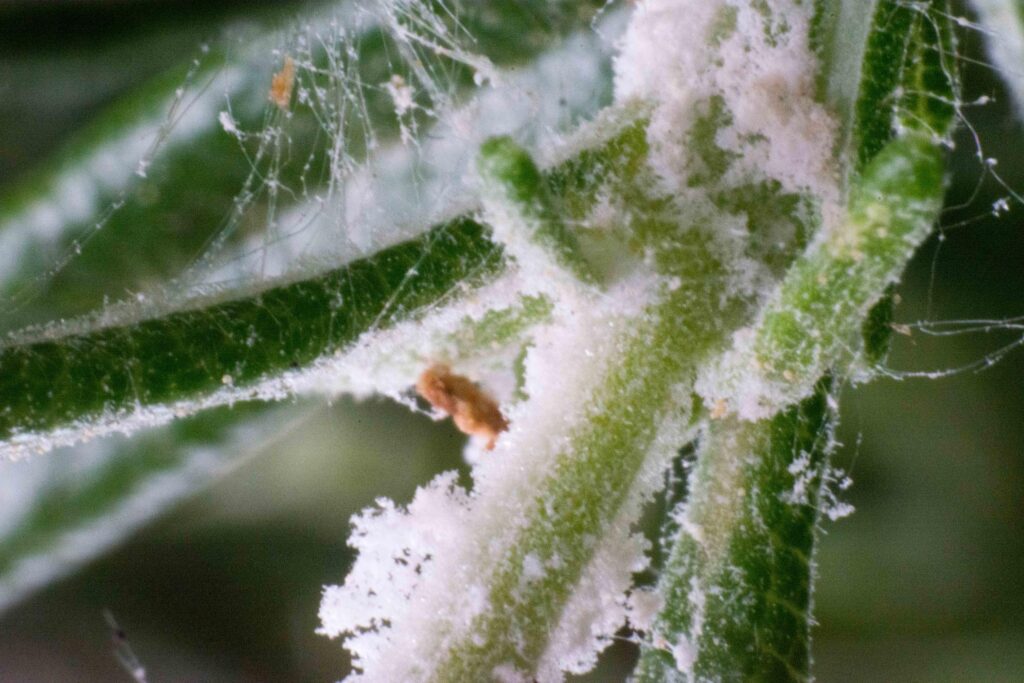
Indoor plant pests can really be a pain in the neck. They ruin your efforts and sabotage your time and labor to see your indoor plants grow healthily. Even when you don’t call for them and you’ve taken the necessary precautions to avoid them, they somehow find a way to sneak into your indoor garden and cause havoc.
There’s no need to worry because you can always deal with these indoor plant pests and show them the way out of your beautiful indoor garden.
First, let’s name some of the pests that may be bothering your indoor plants. Then, we’ll tell you how to get rid of them and keep them from coming back.
Popular Indoor Plant Pests You Should Know
Mealybugs
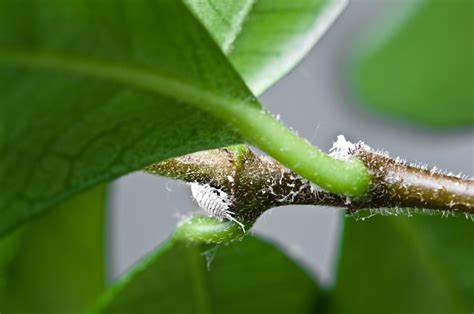
Their cotton-like appearance gives them away and they are difficult to control. Mealybugs suck the sap of indoor plants and leave a residue of honeydew. They are usually found at the stems or leave joints and symptoms of their infestation are wilting and dehydration of houseplants, yellowing, and falling leaves, and stunted plant growth.
How to Control Mealybugs
When you detect them early you can cut out the infested branches. You can also remove the mealybugs with a cotton swab soaked in rubbing alcohol. If your houseplants become severely infested, you can use insecticidal soap and neem oil, and if these won’t work, it would be best to dispose of the houseplants.
Do not overwater or over-fertilize your houseplants as mealybugs are attracted to indoor plants with high nitrogen levels and soft growth.
Whiteflies
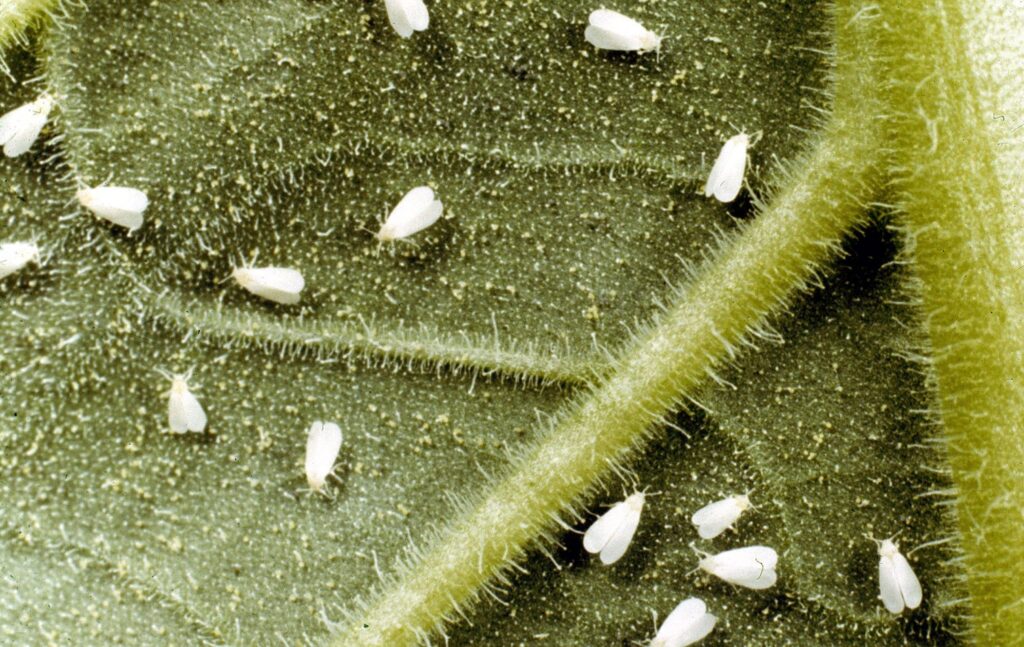
They are harmful little insects that feed on the underside of leaves. Both nymphs and adults damage indoor plants by sucking their nutrients causing stunted growth, yellowing leaves, and reduced yields. This makes the houseplants weak and susceptible to all kinds of diseases.
You have to keep a sharp eye out for them, especially on flowering houseplants such as ivies, hibiscus, and poinsettias.
How to Control Whiteflies
You can get rid of whiteflies by using insecticidal soap or organic neem oil. Focus the treatment on the underside of the leaves where the larvae tend to develop and you can do this weekly until you’re certain your indoor plant is safe.
Thrips

These insects are the most harmful of them all. They feed in a large group and inflict houseplants by sucking the juices on leaves and scraping at fruits, and flowers. Thrips weaken indoor plants, cause distorted growth, and spread diseases.
A common symptom of high thrips infection is leaves becoming pale, splotchy, and silvery before dying. At an early infection stage, houseplants become twisted and scarred.
How to Control Thrips
At an early stage of detection, cut off the leaves or infected branches of your houseplants. Then get rid of the infected parts from your home, so it doesn’t spread to affect other houseplants.
You can also apply organic sprays such as natural pyrethrum or use neem oil for the infected areas. Ensure you apply either the spray or oil on all areas of the houseplants and do not miss any spots. Then, you’ll want to carry out this treatment for some weeks to make sure everything is clear.
Fungus Gnats
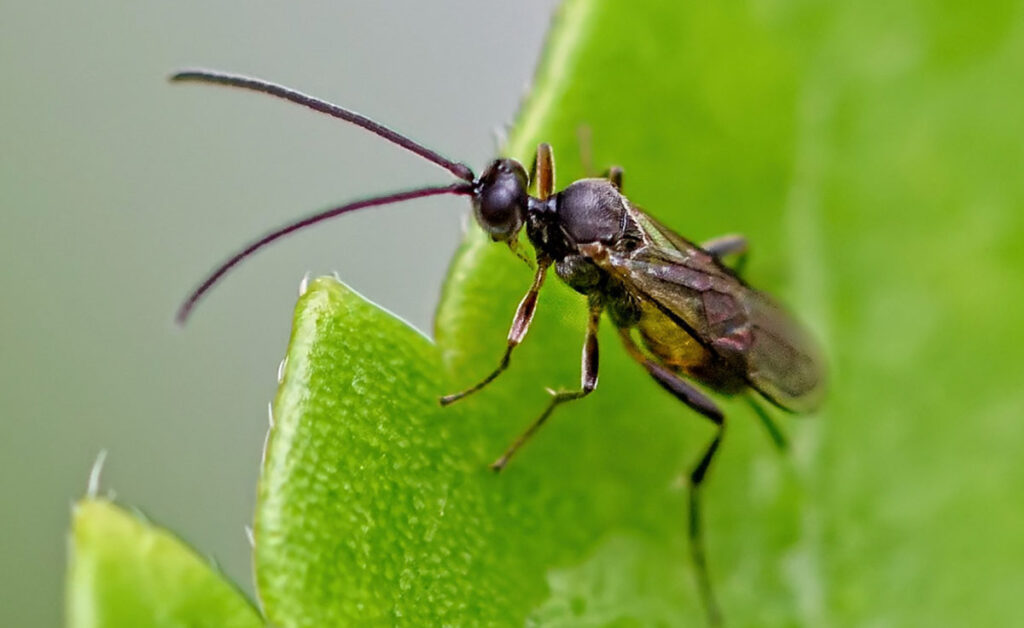
They are often a symptom of overwatering and they are tiny insects that feed on the roots of houseplants. The adults hover around houseplants and don’t cause any damage, whereas, the larvae feed on the roots and organic debris in the potting soil.
Fungus gnats are the most common type of pests you’ll find indoors and they are difficult to spot at an early stage, as they tend to hide under the soil.
How to Control Fungus Gnat
Be careful to avoid overwatering your indoor plants as fungus gnats are attracted to damp soils. Whenever you notice them, allow the soil to dry for some days and this will kill the larvae and prevent the development of eggs in the soil.
For the adult fungus gnats, you can get rid of them with yellow sticky traps placed horizontally at the soil surface. Fungus gnats are attracted to yellow and this makes it easy to capture them with the sticky traps.
Scales
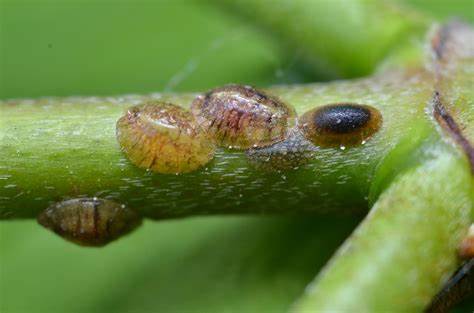
They are mostly found on the underside of leaves and on stems and cover themselves with a brown oval-shaped shell. They suck houseplant saps like mealybugs and it’s tough to get rid of them easily.
Scales can be classified into two groups: Armored and soft scales. The armored scale secretes a waxy covering that is not an integral part of its body and it can be scraped off to locate the insect living beneath it. The waxy covering that a soft scale secretes is an integral part of its body.
The adult scales are immobile with no visible legs, while their offspring are very small and mobile. So, it’s easy to miss them. Scale infected leaves often turn yellow and while they may be found on several other houseplants, they are particularly fond of citrus trees, ivy, and figs.
How to Control Scale
Adult scales are difficult to control because of their waxy protective covering. You can use your fingernail or a soft brush to gently scrape them off. The younger scales without a shell can be sprayed with insecticidal soap or neem oil.
Aphids
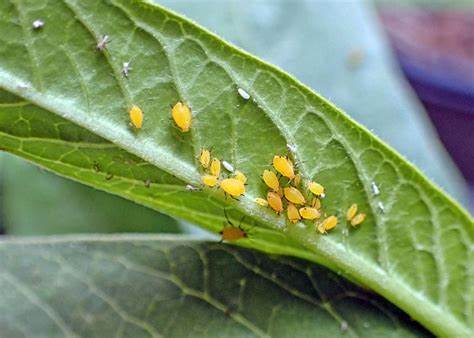
These insects reproduce so quickly that they can infest your indoor plants in a few days. They are usually green but can appear in white, brown, yellow, or black. Some aphids have a woolly or powdery appearance because of their waxy coat.
Aphids weaken houseplants by sucking any of their parts, especially their stems and leaves. They are easy to spot in their large numbers.
How to Control Aphids
Aphids are soft-bodied insects and can be removed with a hard spray of warm soapy water or insecticidal soap. If the infestation is minor, you can handpick or wipe them with a cotton swab dipped in rubbing alcohol.
Spider Mites
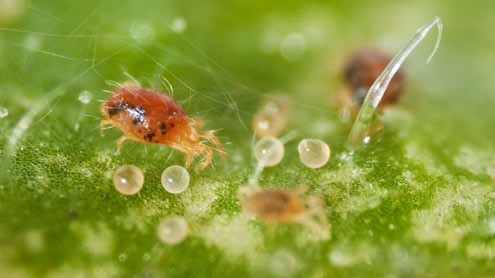
Spider Mites are a type of arachnid related to spiders and they spin webs on your indoor plants to protect their colony and open up quick paths to different parts of the houseplants.
They discolor the leaves of infested houseplants with lots of little brown dots and if left untreated, the leaves become completely yellow, brittle, and eventually die.
How to Control Spider Mites
You can get rid of spider mites by spraying the infested houseplants with insecticidal soap. You can also consider detaching the infested leaves from the houseplants or washing them with warm soapy water. And when the infestation is much, it would be best to do away with the houseplants completely.
Leaf miners
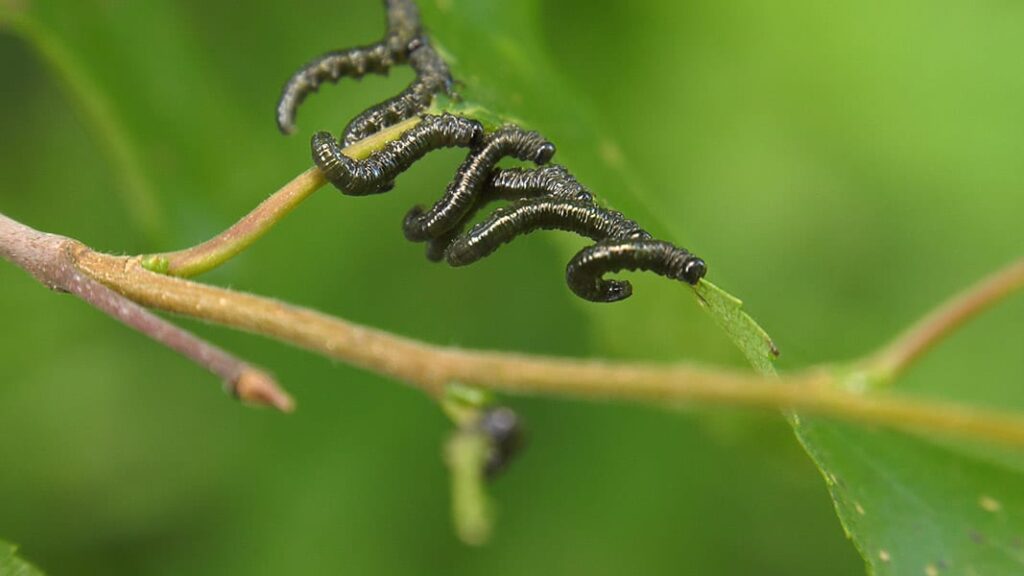
Leaf miners are the larvae of different insects and though they are not as threatening to indoor plants, you still need to manage them before they become an issue. When you notice squiggly trails on the leaves of your houseplants or big blotches of no chlorophyll, these are symptoms of leaf miners.
The color of the leaf miner larvae varies from cream, yellowish-green, to green, depending on the species. The larvae are hard to see because they live between the top and bottom cells of the leaf. There are four main types which are the spinach leaf miner, vegetable leaf miner, American serpentine leaf miner, and the citrus leaf miner.
How to Control Leaf Miner
Leaf miners don’t cause much damage to houseplants but can be deadly to microgreens such as Swiss chard and spinach. You can remove infected leaves from the houseplants and as well, spray the infected area with insecticides such as acetamiprid, imidacloprid, or spinosad to control the leaf miners.
Springtails
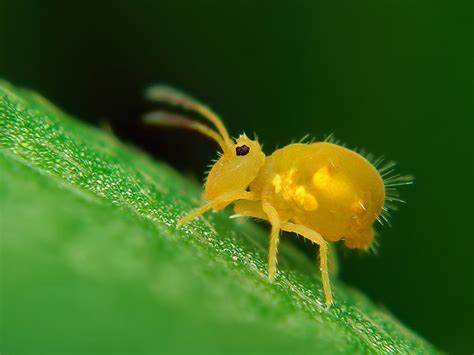
These are tiny, wingless insects that live in the soil and feed on decaying organic matter. Other times, they feed on seedlings and the tender parts of houseplants. They usually occur as a sign of overwatering your indoor plants.
They cause minimal damage to your houseplants and you’ll always notice their movements when you water your indoor plants. Due to the high moisture level of hydroponic growing systems, they are often susceptible to springtails infestation. They cluster at the edge of a grow tank or hydroponic kit container.
How to Control Springtail
Since springtails need water to survive, by limiting the watering for your indoor plants they will begin to reduce in number and eventually go away. However, you have to be mindful of the watering needs and requirements of your houseplants before taking this decision.
You should be on the lookout for excess moisture on your indoor plants, and whenever you suspect springtails in the soil, you can quarantine the houseplant to allow the soil to dry up. Also, you can get rid of them by sprinkling diatomaceous earth on potting soil.
Useful Tips to Prevent Indoor Plant Pests’ Infestation
- Inspect a new houseplant thoroughly and check for likely indoor plant pests before you buy it. Whenever you identify any indoor plant pests in the plant, you should inform the plant shop owner so they can quarantine the houseplant for treatment and ensure it’s not sold to another customer.
- You should always quarantine or isolate your new houseplant for some days before introducing it to your indoor gardening setting. This is so you can properly inspect the leaves and stems for any likely insects and indoor plant pests that might have hidden somewhere you didn’t notice earlier. And after the isolation period is over, you shouldn’t let the leaves of each indoor plant touch one another for a while, so a likely infestation doesn’t spread.
- Ensure your pot or container and potting soil are clean and free of insects. Before you place your new houseplant in the container, make sure the container is properly cleaned with diluted soap and bleach solution to remove any disease-carrying agents.
- Look out for other less common pests such as arthropods – sowbugs, pillbugs, millipedes, etc. – in your potting soil and remove them as quickly as possible. They generally don’t harm indoor plants, but insects like millipedes eat bulbs and tubers. A natural and simple way to get rid of these arthropods is to mix diatomaceous earth with the potting soil.
7 Best Indoor Plant Pesticides of 2023
- Bonide Systemic Houseplant Insect Control
- Garden Safe Houseplant and Garden Insect Killer
- Kate’s Garden Fungus Gnat Killer for Indoor Plants
- BioAdvanced Houseplant Insect & Mite Control
- Grower’s Ally Fungicide Spray for Plants
- TICK BAN Yaya Organics All Natural Extra Strength Tick Repellent
- BioAdvanced Plant Food Insect Control Spikes
| # | Preview | Product | Item Form | Price | |
|---|---|---|---|---|---|
| 1 | 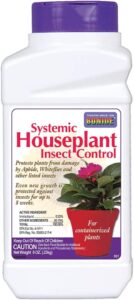 | Bonide Systemic Houseplant Insect Control | Granules | $9.99 |  |
| 2 |  | Garden Safe Houseplant and Garden Insect Killer | Spray | $15.45 | |
| 3 | 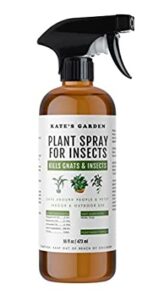 | Kate's Garden Fungus Gnat Killer for Indoor Plants | Oil | $13.99 | |
| 4 | 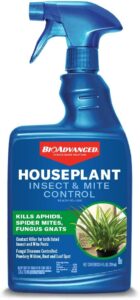 | BioAdvanced Houseplant Insect & Mite Control | Spray | $10.49 | |
| 5 | 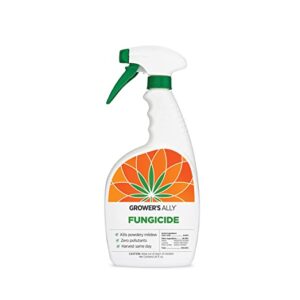 | Grower's Ally Fungicide Spray for Plants | Spray | $13.88 | |
| 6 | 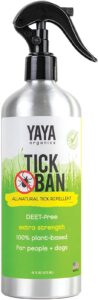 | TICK BAN Yaya Organics All Natural Extra Strength Tick Repellent | Spray | $27.99 | |
| 7 | 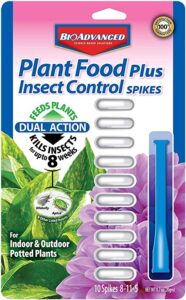 | BioAdvanced Plant Food Insect Control Spikes | Spikes | $6.49 | |
1. Bonide Systemic Houseplant Insect Control
Brand: Bonide | Weight: 0.51 pounds | Item Form: Granules
Are you looking for an effective way to protect your indoor plants from insects and pests? The Bonide Systemic Houseplant Insect Control may be just what you need.
In this review, we will cover the important features of this pesticide, including type, ingredients, mode of action, safety, effectiveness, application method, and price. We will also provide the pros and cons of using this product to help you make an informed decision.
Type of Pesticide: The Bonide Systemic Houseplant Insect Control is a systemic insecticide that gets absorbed into the plant’s tissue, making it effective against both surface and subsurface pests.
SALE
View on Amazon
Ingredients: The active ingredient in this product is imidacloprid, which is known for its ability to control a wide range of insect pests. This pesticide also contains other ingredients like inert ingredients, surfactants, and dispersing agents.
Mode of Action: As a systemic pesticide, the imidacloprid in this product is absorbed into the plant’s tissue and transported throughout the plant. This allows it to provide longer-lasting control against insects, even those that are not visible on the plant’s surface.
Safety: While this product is generally safe to use, it is important to follow the instructions on the label carefully. The imidacloprid in this product can be harmful if ingested, so keep it out of reach of children and pets. Additionally, be careful not to over-apply the product, as this can lead to plant damage.
Effectiveness: The Bonide Systemic Houseplant Insect Control is highly effective against a wide range of insect pests, including aphids, scale, mealybugs, whiteflies, and thrips. It also provides longer-lasting control compared to contact insecticides.
Application Method: This pesticide comes in a ready-to-use formula, making it easy to apply. Simply apply the product to the soil around the plant, and the plant will absorb the insecticide through its roots.
Price: The Bonide Systemic Houseplant Insect Control is an affordable option, with a price range of around $7-$15 depending on the size of the bottle.
In conclusion, the Bonide Systemic Houseplant Insect Control is an effective and affordable option for protecting your indoor plants from insect pests. While it is important to use this product safely and not over-apply, it offers longer-lasting control compared to contact insecticides and is easy to apply. With its broad-spectrum control and systemic mode of action, it is a reliable option for anyone looking to keep their indoor plants healthy and pest-free.
Pro
- Effective against a wide range of insect pests, including those that are not visible on the plant’s surface
- Provides longer-lasting control compared to contact insecticides
- Easy to apply with a ready-to-use formula
- Affordable price point.
Con
- Can be harmful if ingested, so keep out of reach of children and pets
- -Over-application can lead to plant damage
2. Garden Safe Houseplant and Garden Insect Killer
Brand: Garden Safe | Weight: 1 pound | Item Form: Spray
Looking for an effective indoor plant pesticide that won’t harm your family or pets? Look no further than Garden Safe Houseplant and Garden Insect Killer. This powerful insecticide is designed to protect your plants from a wide range of pests while being safe to use around humans and animals.
Type of Pesticide: Garden Safe Houseplant and Garden Insect Killer is an insecticide that works by killing pests on contact. It is suitable for use on indoor and outdoor plants, and can effectively control aphids, whiteflies, mealybugs, spider mites, and other common plant pests.
Ingredients: The active ingredients in Garden Safe Houseplant and Garden Insect Killer are pyrethrins and potassium salts of fatty acids. Pyrethrins are natural compounds derived from chrysanthemum flowers and are known for their insecticidal properties. Potassium salts of fatty acids are a type of soap that can help to break down the protective coating of insects, making them more vulnerable to the pyrethrins.
SALE
View on Amazon
Mode of Action: This indoor plant pesticide works by killing pests on contact. The pyrethrins quickly paralyze the pests, while the potassium salts of fatty acids help to break down their protective coating, ultimately leading to their demise. The mode of action is quick, making it ideal for dealing with severe pest infestations.
Safety: Garden Safe Houseplant and Garden Insect Killer is safe to use around humans and pets, making it an excellent choice for households with children or pets. It is an EPA-approved product, meaning that it has undergone rigorous testing to ensure its safety and efficacy.
Effectiveness: This indoor plant pesticide is highly effective in controlling a wide range of pests, including aphids, whiteflies, mealybugs, spider mites, and more. Users report seeing a noticeable difference in the health of their plants within days of using the product. It is also suitable for use on outdoor plants, making it a versatile option for gardeners.
Application Method: Garden Safe Houseplant and Garden Insect Killer is a ready-to-use formula that can be applied directly to your plants. Simply shake the bottle well, and spray the affected areas of your plant, making sure to cover both the top and underside of the leaves. For severe infestations, it may be necessary to repeat the application after a few days.
Price: This indoor plant pesticide is competitively priced, making it an affordable option for most households. It is available in various sizes, allowing you to choose the option that best suits your needs.
In conclusion, Garden Safe Houseplant and Garden Insect Killer is an excellent choice for anyone looking for an effective indoor plant pesticide. Its combination of pyrethrins and potassium salts of fatty acids makes it highly effective in controlling a wide range of pests, while its safety and affordability make it a popular choice among gardeners. Its quick mode of action also means that you’ll see results in just a few days. However, it may require repeat applications for severe infestations, and some users report a strong odor from the product. Overall, this is a product worth considering for your indoor plant pest control needs.
Pro
- Effective in controlling a wide range of pests
- Safe to use around humans and pests
- Quick mode of action
- Competitive pricing
- Ready-to-use formula for convenient application
Con
- May require repeat applications for severe infestations
- Some users report a strong odour from the product
3. Kate’s Garden Fungus Gnat Killer for Indoor Plants
Brand: Kate’s Garden | Weight: 16 ounces | Item Form: Oil
Kate’s Garden Fungus Gnat Killer for Indoor Plants is a popular pesticide designed to control fungus gnats on indoor plants. In this review, we’ll look at the features that make this product stand out and explore its pros and cons.
Type of Pesticide: Kate’s Garden Fungus Gnat Killer is a type of insecticide specifically formulated to target fungus gnats. It contains natural and organic ingredients that are safe to use on indoor plants.
Ingredients: The active ingredient in Kate’s Garden Fungus Gnat Killer is Bacillus thuringiensis var. israelensis, a naturally occurring bacteria that is highly effective at controlling fungus gnats. The product is also infused with rosemary and clove oils, which have antifungal properties.
SALE
View on Amazon
Mode of Action: This pesticide works by infecting and killing the larvae of fungus gnats, which are a common pest in indoor plants. The bacteria in the product produces toxins that paralyze the larvae, preventing them from feeding and eventually killing them.
Safety: Kate’s Garden Fungus Gnat Killer is safe to use around children and pets. The product is organic and does not contain any harmful chemicals or synthetic ingredients that can harm your health or the environment.
Effectiveness: This product is highly effective at controlling fungus gnats. The active ingredient, Bacillus thuringiensis var. israelensis, is a proven insecticide that is widely used in organic farming. Many users have reported a significant reduction in fungus gnats after using this product.
Application Method: Kate’s Garden Fungus Gnat Killer comes in a convenient spray bottle that makes it easy to apply. Simply spray the product directly onto the soil around your plants, making sure to cover the entire surface.
Price: This product is reasonably priced and is an affordable option for those looking to control fungus gnats on their indoor plants.
In conclusion, Kate’s Garden Fungus Gnat Killer for Indoor Plants is a highly effective and safe pesticide for controlling fungus gnats on indoor plants. Its natural and organic ingredients, combined with its proven effectiveness, make it an excellent choice for anyone looking to keep their plants healthy and pest-free. While it may not be effective against other pests or diseases and may require multiple applications for severe infestations, its affordable price and easy application method make it a great value for anyone dealing with fungus gnats.
Pro
- Highly effective at controlling fungus gnats
- Contains natural and organic ingredients
- Safe to use around children and pets
- Convenient spray bottle for easy application
- Reasonably priced
Con
- Only effective against fungus gnats and not other pests or diseases
- May require multiple applications for severe infestations.
4. BioAdvanced Houseplant Insect & Mite Control
Brand: BioAdvanced | Weight: 24 ounces | Item Form: Spray
If u’re looking for a solution to control pests and mites on your indoor plants, BioAdvanced Houseplant Insect & Mite Control is a great option to consider. This pesticide comes with several features that make it effective, safe, and easy to use.
In this review, we’ll take a closer look at its type of pesticide, ingredients, mode of action, safety, effectiveness, application method, and price.
Type of Pesticide: BioAdvanced Houseplant Insect & Mite Control is an insecticide and miticide, designed specifically for use on indoor plants. This product can control a wide range of pests, including spider mites, whiteflies, aphids, and mealybugs.
SALE
View on Amazon
Ingredients: The active ingredient in BioAdvanced Houseplant Insect & Mite Control is spirotetramat, which belongs to the tetramic acid class of chemicals. This ingredient works by inhibiting the energy production in the pest’s body, leading to its death. Additionally, the product is formulated with mineral oil, which helps to suffocate pests and mites on contact.
Mode of Action: BioAdvanced Houseplant Insect & Mite Control has a systemic mode of action, meaning it is absorbed into the plant’s tissue and provides long-lasting control. It can also work as a contact insecticide by suffocating the pests and mites on the surface of the plant.
Safety: This pesticide is considered safe for indoor use and won’t harm your pets or children. However, it’s recommended to keep them away from the treated plants until the spray has dried. BioAdvanced Houseplant Insect & Mite Control is also safe for use on edibles, and you don’t have to worry about any residual chemicals on the plant.
Effectiveness: This product has received positive feedback from many users for its effectiveness in controlling a wide range of pests and mites. It starts to work quickly and can provide up to 30 days of protection. BioAdvanced Houseplant Insect & Mite Control is also effective in preventing the pests from laying eggs, preventing future infestations.
Application Method: BioAdvanced Houseplant Insect & Mite Control comes in a ready-to-use spray bottle, making it easy to apply directly to the plant’s foliage. It’s recommended to spray the plant until it’s thoroughly wet, including the undersides of the leaves. The product should be applied every 7-14 days, depending on the severity of the infestation.
Price: Compared to other indoor plant pesticides, BioAdvanced Houseplant Insect & Mite Control is reasonably priced. It offers excellent value for money considering its effectiveness and the amount of product provided in the bottle.
In conclusion, BioAdvanced Houseplant Insect & Mite Control is an excellent choice for indoor plant owners looking for an effective and safe way to control pests and mites. It’s reasonably priced, easy to use, and provides long-lasting protection against infestations. The only downside is that it may require repeated applications for severe infestations, and it has a strong odor that may be unpleasant to some users. Overall, this is a high-quality product that is worth considering for anyone looking to protect tmites indoor plants from pests and mites
Pro
- Provides long-lasting protection.
- Safe for use on edibles and won’t harm pets or children.
- Easy to use with a ready-to-use spray bottle.
- Reasonably priced
Con
- Only effective against fungus gnats and not other pests or diseases
- May require multiple applications for severe infestations.
5. Grower’s Ally Fungicide Spray for Plants
Brand: Grower’s Ally | Weight: 24 ounces | Item Form: Spray
Grower’s Ally Fungicide Spray for Plants is a popular choice for indoor gardeners looking for an effective solution to fungal diseases. In this review, we’ll look at the different features of this product and its pros and cons to help you decide if it’s the right choice for your needs.
Type of Pesticide: Grower’s Ally Fungicide Spray is a fungicide that helps prevent and control fungal diseases in indoor plants. It’s formulated to work on a wide range of fungal diseases, including powdery mildew, black spot, and rust.
Ingredients: The active ingredient in Grower’s Ally Fungicide Spray is potassium bicarbonate, a natural compound that is effective against fungal diseases. It also contains citric acid, which helps to enhance the effectiveness of the potassium bicarbonate.
SALE
View on Amazon
Mode of Action: This fungicide spray works by disrupting the cell walls of fungal spores, preventing them from germinating and spreading to other parts of the plant. The potassium bicarbonate also increases the pH of the plant’s surface, making it less hospitable to fungal growth.
Safety: One of the biggest advantages of Grower’s Ally Fungicide Spray is that it’s safe to use around children and pets. The ingredients are all-natural and non-toxic, and the spray doesn’t leave any harmful residues. However, it’s always a good idea to wear gloves and eye protection when applying any pesticide, even a natural one.
Effectiveness: Grower’s Ally Fungicide Spray has been proven to be effective against a wide range of fungal diseases. Many users report seeing a noticeable improvement in their plant’s health and appearance after just a few applications. However, it’s important to note that this product is best used as a preventative measure, and may not be as effective once a fungal disease has taken hold.
Application Method: Grower’s Ally Fungicide Spray is a ready-to-use formula that can be applied directly to your plants. Simply spray it on the affected areas and let it dry. For best results, it’s recommended to apply the spray every 7-10 days, especially during humid conditions or if you’ve had previous fungal issues.
Price: Grower’s Ally Fungicide Spray is competitively priced compared to other natural fungicides on the market. While it may be slightly more expensive than some chemical-based alternatives, it’s worth it for the peace of mind that comes with using a non-toxic solution.
In conclusion, Grower’s Ally Fungicide Spray for Plants is an excellent choice for indoor gardeners looking for a natural and effective solution to fungal diseases. Its all-natural and non-toxic ingredients make it safe to use around children and pets, and its effectiveness against a wide range of fungal diseases is impressive. While it may require multiple applications for best results, the convenience of its ready-to-use formula and competitive price make it a top choice for many plant lovers.
Pro
- Natural and non-toxic ingredients
- Effective against a wide range of fungal diseases
- Ready-to-use formula
- Competitive price
Con
- May not be as effective once a fungal disease has taken hold
- Requires multiple applications for best results.
6. TICK BAN Yaya Organics All Natural Extra Strength Tick Repellent
Brand: Tick Ban | Weight: 16 ounces | Item Form: Spray
Tick Ban Yaya Organics All-Natural Extra Strength Tick Repellent is a popular choice for those looking for a natural solution to protect themselves and their pets from ticks. In this review, we’ll go over the different features of this product to help you decide if it’s the right tick repellent for you.
Type of Pesticide: Tick Ban Yaya Organics All-Natural Extra Strength Tick Repellent is an insecticide and repellent that is specifically formulated to repel ticks.
Ingredients: This product is made with all-natural ingredients, including essential oils such as cedarwood, peppermint, and lemongrass. It also contains water, grain alcohol, and glycerin. The natural ingredients are safe for use around pets and humans.
SALE
View on Amazon
Mode of Action: The essential oils in this product work by masking the scent of the host, making it difficult for ticks to detect their target. This helps to prevent them from latching on and transmitting diseases such as Lyme disease.
Safety: One of the significant advantages of this product is that it is all-natural and safe to use around pets and humans. There are no harmful chemicals or toxins, making it a safer alternative to traditional chemical-based tick repellents.
Effectiveness: Tick Ban Yaya Organics All-Natural Extra Strength Tick Repellent has been shown to be effective in repelling ticks. Many users have reported that it works well, even in areas with high tick populations. However, the effectiveness can vary depending on the severity of the infestation
Application Method: This product comes in a spray bottle, making it easy to apply directly to your skin or your pet’s fur. Simply spray it on the areas where you want protection, such as your ankles, legs, and arms.
Price: The price of Tick Ban Yaya Organics All-Natural Extra Strength Tick Repellent is on the higher side compared to other natural tick repellents. However, the all-natural ingredients and effectiveness make it a worthwhile investment.
In conclusion, Tick Ban Yaya Organics All-Natural Extra Strength Tick Repellent is an excellent choice for those looking for a natural tick repellent that is safe and effective. While the price may be higher than other natural repellents, the quality of the ingredients and effectiveness make it a worthwhile investment.
Pro
- Made with all-natural ingredients
- Safe to use around pets and humans
- Effectively repels ticks
- Easy to apply with the spray bottle
Con
- The price is on the higher side compared to other natural tick repellents
- The effectiveness can vary depending on the severity of the infestation.
7. BioAdvanced Plant Food Insect Control Spikes
Brand: BioAdvanced | Weight: 1.76 ounces | Item Form: Spikes
When it comes to keeping your indoor plants healthy, one of the most important steps is to protect them from pests and insects. BioAdvanced Plant Food Insect Control Spikes are a popular choice for many gardeners, thanks to their combination of plant food and insect control. Let’s take a closer look at the features of this product and how it might be a good fit for your needs.
Type of Pesticide: BioAdvanced Plant Food Insect Control Spikes are a systemic pesticide, which means that they are absorbed into the plant’s tissue and provide long-lasting control. The active ingredient in these spikes is imidacloprid, which targets a range of common indoor plant pests including aphids, whiteflies, and mealybugs.
SALE
View on Amazon
Ingredients: In addition to imidacloprid, BioAdvanced Plant Food Insect Control Spikes contain a range of nutrients that are essential for plant growth, including nitrogen, phosphorus, and potassium. The slow-release formula of these spikes ensures that your plants get a steady supply of nutrients over time.
Mode of Action: These spikes are inserted into the soil around the plant’s roots, where they dissolve and release their active ingredient. The imidacloprid then moves through the plant’s vascular system, providing protection against pests for up to two months.
Safety: BioAdvanced Plant Food Insect Control Spikes are generally safe to use around people and pets, as long as they are used according to the instructions on the package. However, as with any pesticide, it’s important to keep the product out of reach of children and avoid contact with skin or eyes.
Effectiveness: Users of BioAdvanced Plant Food Insect Control Spikes report that they are effective at controlling a range of indoor plant pests, including aphids, mealybugs, and scale insects. The slow-release formula also helps to keep plants healthy and promote growth over time.
Application method: One of the main advantages of BioAdvanced Plant Food Insect Control Spikes is that they are very easy to use. Simply insert the spikes into the soil around your plants and water as usual. The spikes will dissolve and release their active ingredient over time.
Price: BioAdvanced Plant Food Insect Control Spikes are priced competitively with other indoor plant pesticides on the market. while they may be more expensive than some other options, the combination of plant food and insect control may make them a more cost-effective choice in the long run.
Overall, BioAdvanced Plant Food Insect Control Spikes are a solid choice for anyone looking for an easy-to-use and effective way to protect their indoor plants from pests and promote healthy growth. As with any pesticide, it’s important to use them responsibly and according to the instructions on the package.
Pro
- Easy to use and apply
- Long-lasting protection against indoor plant pests
- Combination of plant food and insect control promotes healthy growth
- Safe to use around people and pets when used according to the instructions
Con
- May be more expensive than some other indoor plant pesticides
- Some users may prefer a more targeted approach to pest control, rather than a systemic pesticide
Final Thoughts
As the saying goes, “prevention is better than cure”, so it would be wise to prevent indoor plant pests from gaining entry into your indoor gardening system than trying to control them after they might have caused a lot of damage.
Knowing and identifying the indoor plant pests that you’re likely to deal with is the first step, taking the necessary indoor plant care precaution is another for trouble and indoor plant pests-free indoor gardening experience. However, these indoor plant pests can be tricky, and find a way to avoid your initial traps. When this happens, don’t panic but simply follow the tips we’ve provided and get back on the right track.
Frequently Asked Questions
What are the common indoor plant pests?There are several indoor plant pests but the common ones are springtails, leaf miners, spider mites, aphids, scales, fungus gnat, thrips, whiteflies, and mealybugs.
What are the signs of mealybugs-infested houseplants?When your houseplants are attacked by mealybugs the plants begin to wilt, the leaves turn yellow, and the growth is stunted.
How do I control mealybugs?They are attracted to houseplants with high nitrogen and water. Avoid overwatering and over-fertilizing your plants. You can remove mealybugs on your indoor plants with a cotton swab soaked in rubbing alcohol.
How do I control whiteflies?You can get rid of whiteflies from your indoor garden by spraying insecticidal soap and neem oil.
How damage do thrips cause to houseplants?Thrips feed in a large group and suck the juice from leaves causing distorted growth for your houseplants.
How do I get rid of fungus gnats?They are attracted to damp soil. Avoid overwatering your houseplants and you’ll reduce the population of fungus gnats in your indoor garden.
Top Rated Indoor Plant Pesticides of 2023
| # | Preview | Product | Item Form | Price | |
|---|---|---|---|---|---|
| 1 | | Bonide Systemic Houseplant Insect Control | Granules | $9.99 | |
| 2 | | Garden Safe Houseplant and Garden Insect Killer | Spray | $15.45 | |
| 3 | | Kate's Garden Fungus Gnat Killer for Indoor Plants | Oil | $13.99 | |
| 4 | | BioAdvanced Houseplant Insect & Mite Control | Spray | $10.49 | |
| 5 | | Grower's Ally Fungicide Spray for Plants | Spray | $13.88 | |
- Bonide Systemic Houseplant Insect Control
- Kate’s Garden Fungus Gnat Killer for Indoor Plants
- BioAdvanced Houseplant Insect & Mite Control
BESTSELLER NO. 1
SALE
Bonide Systemic Houseplant Insect Control $9.99BESTSELLER NO. 2
SALE
Kate’s Garden Fungus Gnat Killer for Indoor Plants $13.99BESTSELLER NO. 3
SALE
BioAdvanced Houseplant Insect & Mite Control $10.49